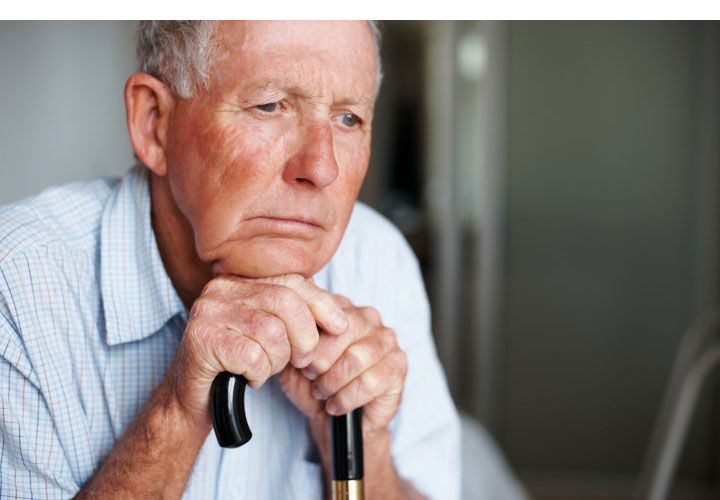
The abuse of older persons is a widespread social problem in many countries around the world, which is why the United Nations designated 15 June as World Elder Abuse Awareness Day.
According to the World Health Organization, abuse of older persons is defined as a single or repeated act, or lack of appropriate action, occurring within any relationship where there is an expectation of trust, which causes harm or distress to an older person. It includes physical, sexual, psychological and/or economic violence, as well as neglect, leading to distress, violating dignity and causing physical or mental harm to the older person.
In the context of domestic violence, older persons have, precisely at the proposal of the Ombudswoman, been recognised since 2018 under the Protection Against Domestic Violence Act as a specially protected group, alongside children and women.
Unfortunately, data on abuse of older persons remain incomplete, while it is also estimated that a large number of cases go unreported. Older persons who are victims of abuse often do not report it due to fear of consequences, shame and social exclusion, but also due to lack of information and mistrust in institutions.
The results of a survey conducted by the Gender Equality Commission of the City of Zagreb on experiences and attitudes concerning violence against older persons show that every fifth older person living in Zagreb has experienced some form of violence. It is particularly concerning that in almost two out of three cases the perpetrators were persons close to the victim, from their immediate family circle.
Data on domestic violence are also collected once a year through the Commission for Monitoring and Improving the Work of Bodies Involved in Criminal and Misdemeanour Proceedings and the Enforcement of Sanctions Related to Protection against Domestic Violence. The collected data show a significant increase in domestic violence against older persons: in 2018, 150 older persons were registered as victims of domestic violence, while according to the latest available data, for 2024, 964 older victims were registered.
However, as the existing data collection system is insufficient, it is not clear whether this increase is the result of better identification of violence, greater willingness to report it, or whether there has indeed been an actual increase in violence. For this reason, the Ombudswoman issued a recommendation to the Ministry of Justice, Public Administration and Digital Transformation on the need to amend the existing regulations in order to enable better monitoring of domestic violence against older persons, which is a prerequisite for designing and implementing effective public policies aimed at combating it.
Another problem is the fact that forms of abuse of older persons which are not physical are often not recognised. For example, strained relationships and conflicts over inheritance are often triggers for domestic violence, while in practice they are primarily treated as property-law disputes rather than abuse of older persons. For this reason, the Ombudswoman also recommended better training for services that are the first point of contact with victims or are part of the system for combating violence, such as the police, social welfare and healthcare services, so that they can identify such forms of abuse of older persons in a timely manner, particularly when it comes to economic and psychological violence and the neglect of older persons’ needs.
Likewise, no data are collected on abuse of older persons placed in institutions, although according to the above-mentioned survey by the City of Zagreb, almost every fifth older person has experienced violence by employees in institutions and facilities that should be providing them with care, such as homes for older and infirm persons, or by healthcare or social welfare professionals.
Therefore, the Ombudswoman also pointed to the need to conduct national research on the prevalence of abuse of older persons, which would include both domestic and institutional violence. It is also important to design and implement training for care home employees on the rights of older persons, including the issue of violence and abuse, in order to ensure a higher level of respect for the rights of older persons.
All recommendations and further information on this topic are available in the Ombudswoman’s Special Report on the Rights of Older Persons in Croatia.