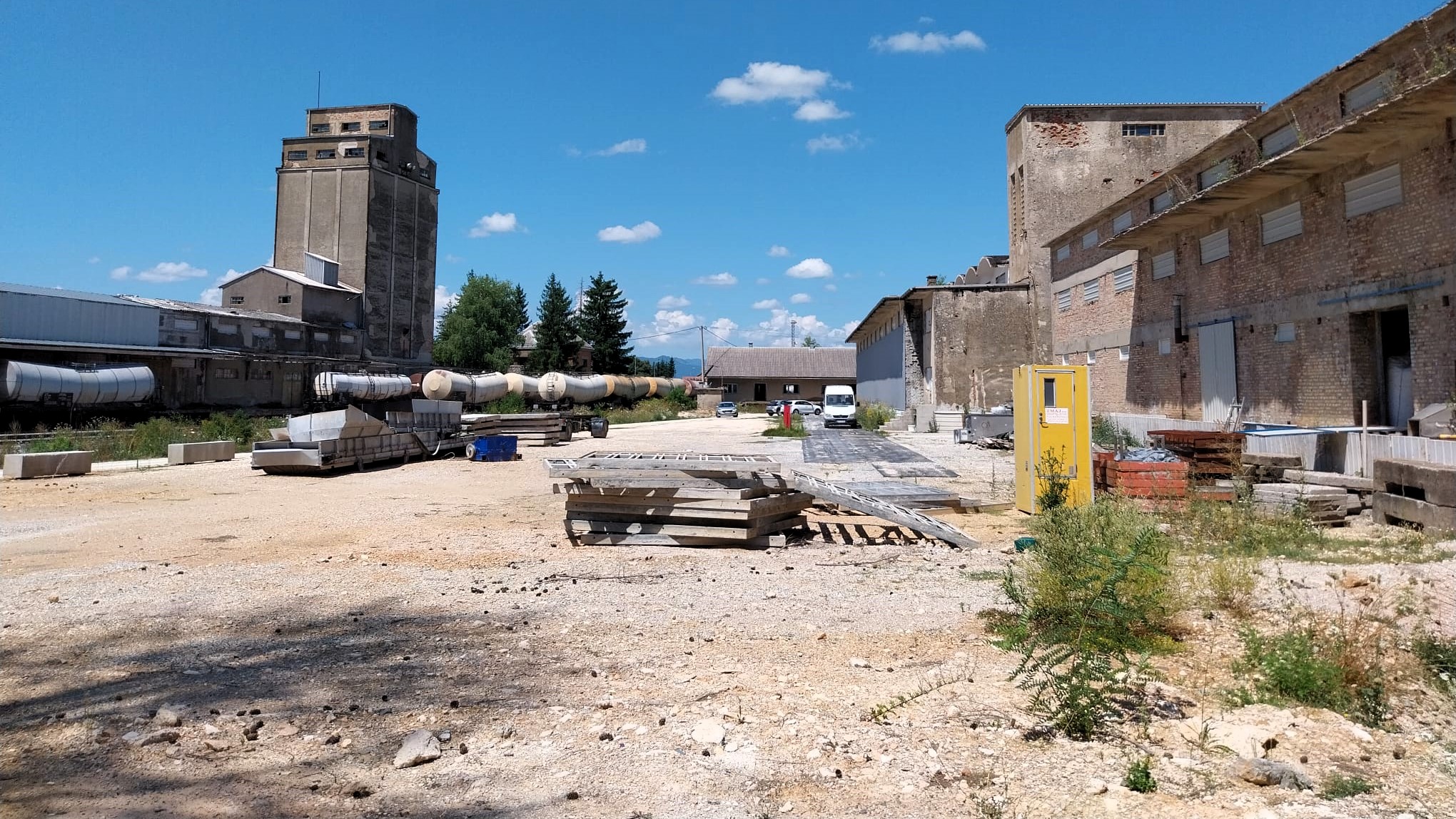
The expert assessment of the industrial complex in Gospić, where hazardous waste had been disposed of, has unfortunately confirmed contamination of the soil, vegetation and habitats at the illegal waste disposal site, as well as the presence of hazardous chemicals in groundwater downstream from the site. The experts also warn that the ecosystem has been severely degraded, that the waste constitutes a continuing source of danger and poses a significant risk to the environment and human health, and that there is a real and foreseeable risk of further harm unless remediation measures are implemented and the waste is removed.
Ombudswoman Tena Šimonović Einwalter first alerted the competent authorities responsible for taking action to this serious problem back in February 2025. Based on media reports, she launched an own-initiative inquiry into a possible violation of the human right to a clean, healthy and sustainable environment due to the illegal disposal of waste at several locations, including Gospić, Benkovac, Varaždin and Poznanovec. Subsequently, in June 2025, the civic initiative “Gospić je naš dom” also submitted a complaint to the Ombudswoman. In July 2025, the Deputy Ombudswoman and advisers from the Office visited the illegal waste disposal site in the Gospić area.
Throughout the inquiry, the Ombudswoman focused in particular on the commencement of remediation of the affected area and the impact of the contamination on the health of local residents, especially given that this is a karst area with groundwater of importance to both the local and wider area. She also focused on ensuring that the local community is provided with clear and transparent information about the actions being taken by the competent authorities in this case, particularly about possible risks to residents’ health.
Therefore, as early as September 2025, the Ombudswoman recommended that the City of Gospić and the Lika-Senj County Institute of Public Health continuously provide the local population with accessible, clear and easy-to-understand information about the situation and the measures planned to protect human health, the environment and nature.
In order to identify in a timely manner any potential adverse effects of the disposal site on the health of the local population and to implement measures to address them, the Ombudswoman also recommended systematic and long-term epidemiological and biological monitoring. This should enable an assessment of the potential impact of environmental factors arising from the situation on the incidence of cancer or other chronic non-communicable diseases, as well as the implementation of targeted preventive measures should any deviations from usual trends be identified.
She also pointed to the precautionary principle laid down in the Environmental Protection Act, according to which necessary protective measures must not be delayed where there is a risk of actual and irreparable harm to human health and the environment, even if that risk has not yet been fully investigated scientifically.
She further pointed out that Directive (EU) 2016/343 of the European Parliament and of the Council of 9 March 2016 on the strengthening of certain aspects of the presumption of innocence and of the right to be present at the trial in criminal proceedings allows public authorities to disseminate information about criminal proceedings where this is strictly necessary for reasons relating to the criminal investigation. This may include, for example, providing information for safety reasons to residents of an area affected by an alleged environmental criminal offence. The Ombudswoman stressed this in the context of the need to begin full environmental remediation as soon as possible, in order to protect the health and safety of the residents of Gospić, as well as the environment and nature.
In October 2025, Ombudswoman Šimonović Einwalter again publicly warned about the seriousness of the problem and the urgent need to remediate the illegally disposed waste in Gospić. This followed the completion of the necessary evidentiary actions, including searches and on-site inspections, carried out by the Office for the Suppression of Corruption and Organised Crime (USKOK) as part of an investigation into suspected criminal offences against the environment and the economy committed as part of a criminal association. With these investigative actions completed, the obstacles to beginning the remediation of the illegally disposed waste in Gospić had been removed.
The Ombudswoman reported on the case to the Croatian Parliament in March 2026 in her Annual Report for 2025, informing Parliament and the public about the inquiry, the recommendations she had issued and the responses received from the competent institutions regarding the monitoring of water intended for human consumption, monitoring of the health of the population, and provision of information to local residents about the situation and the actions being taken.
Moreover, in order to address the problem of illegal waste disposal sites throughout Croatia more effectively and deter potential offenders from similar conduct in the future, in her Annual Report for 2025 the Ombudswoman recommended that the Ministry of Environmental Protection and Green Transition prepare amendments to the Waste Management Act providing for stricter fines for the illegal disposal of waste into the environment.
Following the public consultation on amendments to the Act held in July 2026, the Ombudswoman participated in the consultation and once again stressed the need for stricter penalties for illegal waste disposal, with the aim of preventing the creation of uncontrolled disposal sites where waste, including waste that is hazardous and harmful to human health, is deposited.
The situation has understandably become a focus of public attention in August 2026. We hope that this will now also lead to an urgent resolution of the problem affecting the residents of Gospić. At the same time, this is an issue of broader significance for the Republic of Croatia, not least because the case has also raised questions about waste disposal at a number of other locations across the country, as well as about the overall model for handling such cases.
At the same time, in recent days we have seen a large number of public statements and comments, some of which may cause additional concern among residents of the affected areas, particularly where information is disseminated that has not been professionally substantiated or verified. As an independent institution, the Ombudswoman therefore calls for six steps that now need to be taken.
1. Urgent removal and proper disposal of the waste
Unfortunately, the process of removing the illegally disposed waste in the City of Gospić has still not begun. Concerns among local residents about their own health and the health of future generations have increased further following the publication of the findings of the expert assessment carried out by the Faculty of Geotechnical Engineering, University of Zagreb.
It is therefore essential to remove the hazardous waste as soon as possible and ensure its proper disposal, thereby preventing further harm to groundwater, soil, habitats and vegetation, and consequently to the health of residents. This is the first step that needs to be taken to protect these citizens’ constitutional right to a healthy life and a healthy environment.
2. Clear, credible and continuous information for citizens
Given the time that has elapsed since illegal waste disposal began in the City of Gospić and since citizens first raised concerns about the problem, their lack of confidence in the effectiveness of the response by the competent authorities is understandable, particularly as this situation should never have arisen in the first place.
Citizens must therefore now be provided with clear, understandable, credible and continuous information on key issues relating to the protection of their health, primarily regarding the safety of water intended for human consumption and whether it can be used without posing a risk to health, as well as the impact of the waste on the soil, agricultural crops and air.
Public communication on this issue must be handled with the utmost seriousness. Citizens need to receive the necessary information from experts and from competent and authorised institutions. The information provided must be accurate, complete and scientifically sound, and based on the results of all necessary testing.
Otherwise, the dissemination of inaccurate or unqualified information, politicisation and sensationalism could lead to the worst possible outcome for the residents of Gospić and the surrounding area: either unnecessarily frightening and alarming people or, conversely, downplaying the seriousness of the situation, or creating the perception that its seriousness is being downplayed – all without the underlying problem actually being resolved.
3. Testing and monitoring to assess the impact on human health
This requires not only water testing, soil sampling and air-quality testing in the City of Gospić, but also such testing in other areas that may be affected by the harmful consequences of the disposal of this hazardous waste into the environment.
It is also important to conduct epidemiological and biological monitoring in order to assess the potential impact of environmental factors arising from this situation on the health of residents of the City of Gospić and other areas that may be affected by the harmful consequences of this case, as well as to implement targeted preventive measures if necessary.
4. Investigating other locations in the same manner
In addition to the City of Gospić, it is essential to establish whether hazardous waste has also been illegally disposed of at other locations in Croatia. Following recent media reports, the Ombudswoman has already launched own-initiative inquiries and requested information from the competent authorities.
5. Reviewing the model for handling such cases and the legislative framework
The illegal disposal of hazardous waste at a number of locations points to the need to review both the model for handling such cases and the existing legislative framework. These should be designed to have a deterrent and preventive effect and thereby prevent similar situations from occurring anywhere in Croatia in the future.
Stricter penalties would certainly be a step in the right direction. The review and further development of the legislative framework should also include consideration of the possible introduction of ecocide as a criminal offence, with the proper, consistent and timely application of such provisions being essential.
6. Establishing the accountability of all responsible parties in this case
It is also necessary to establish the responsibility of all those involved in this process. This includes persons suspected of committing criminal offences against the environment and the economy as part of a criminal association, as well as examining whether there were any failures on the part of the competent institutions in the overall handling of the case after the scale of hazardous waste disposal in the City of Gospić and its harmful impact on the environment and human health became known. Possible long-term consequences for the health of residents of the area must also be taken into account.