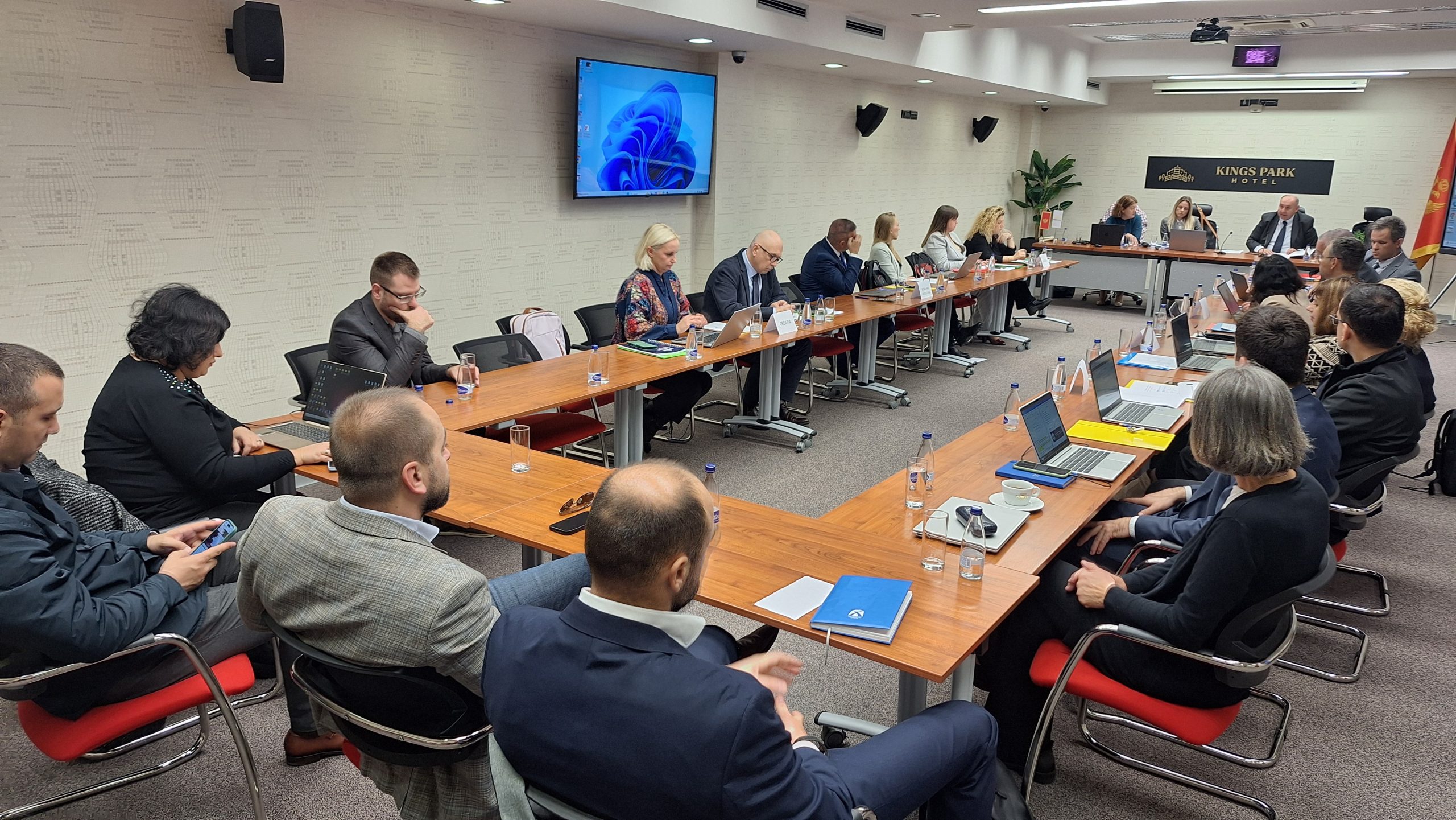
National Preventive Mechanisms (NPMs) for the prevention of torture and other cruel, inhuman, or degrading treatment or punishment, members of the Southeast European NPM Network (SEE NPM), met on 5–6 November 2025 in Podgorica.
The topic of the meeting was involuntary hospitalization in criminal and civil proceedings. Deputy Ombudsman Saša Rajić and Advisor to the Ombudswoman Anica Tomšić also participated. During the meeting, NPM representatives shared experiences, challenges, and issues related to the treatment and management of persons with mental health conditions placed under involuntary hospitalization.
At the conclusion of the meeting, the Network representatives issued the following recommendations:
- Any form of involuntary hospitalization should, following an individual assessment, be based on a court decision subject to review within a specified timeframe, with access to legal remedies.
- Individuals placed under involuntary hospitalization should have procedural safeguards, including the right to a lawyer and other rights during admission, as well as information on the reasons for involuntary hospitalization.
- States should ensure the availability of a sufficient number of qualified and continuously trained professionals, including psychiatrists, psychologists, nurses, and social workers, educated in human rights standards, de-escalation techniques, and non-coercive treatment methods.
- The treatment environment must uphold the dignity and personal autonomy of patients.
- Any restriction of autonomy must be legally justified and apply only in clearly and strictly defined exceptional circumstances.
- States should develop and adequately fund community-based mental health and social support services to ensure continuity of care after discharge from hospitals.
- No person should be forced into hospitalization once medical reasons no longer exist, solely due to the unavailability of alternative accommodation or community support. This constitutes a violation of the right to liberty and may be considered inhuman or degrading treatment.
- Special attention must be given to the protection of vulnerable groups, including women, children, and older persons, whose specific needs and risks must be addressed through tailored protective measures and sensitive approaches according to gender and age.
More information on the activities of the Ombudswoman’s Office through the NPM mandate can be found in the Ombudswoman’s 2024 Annual Report.