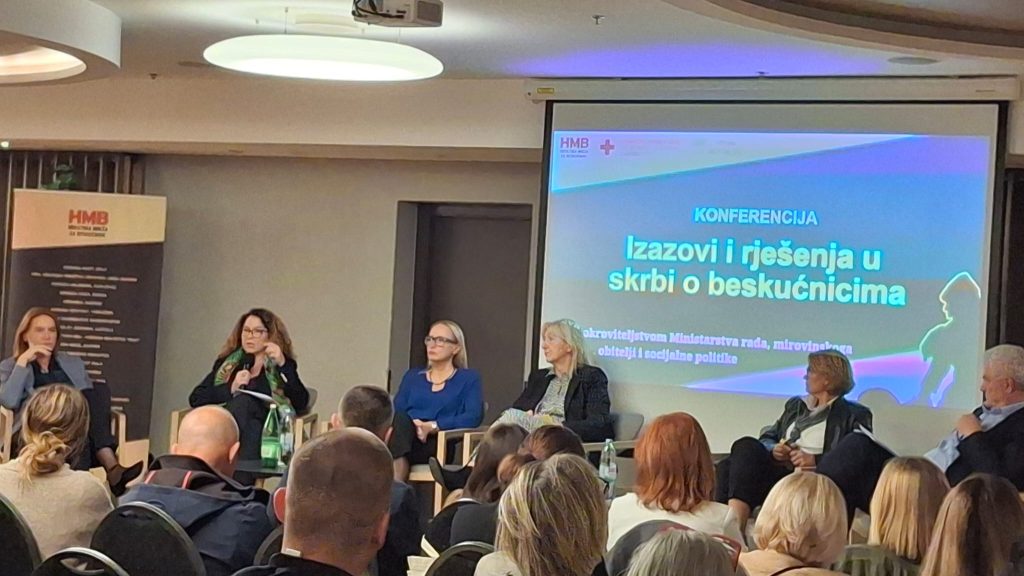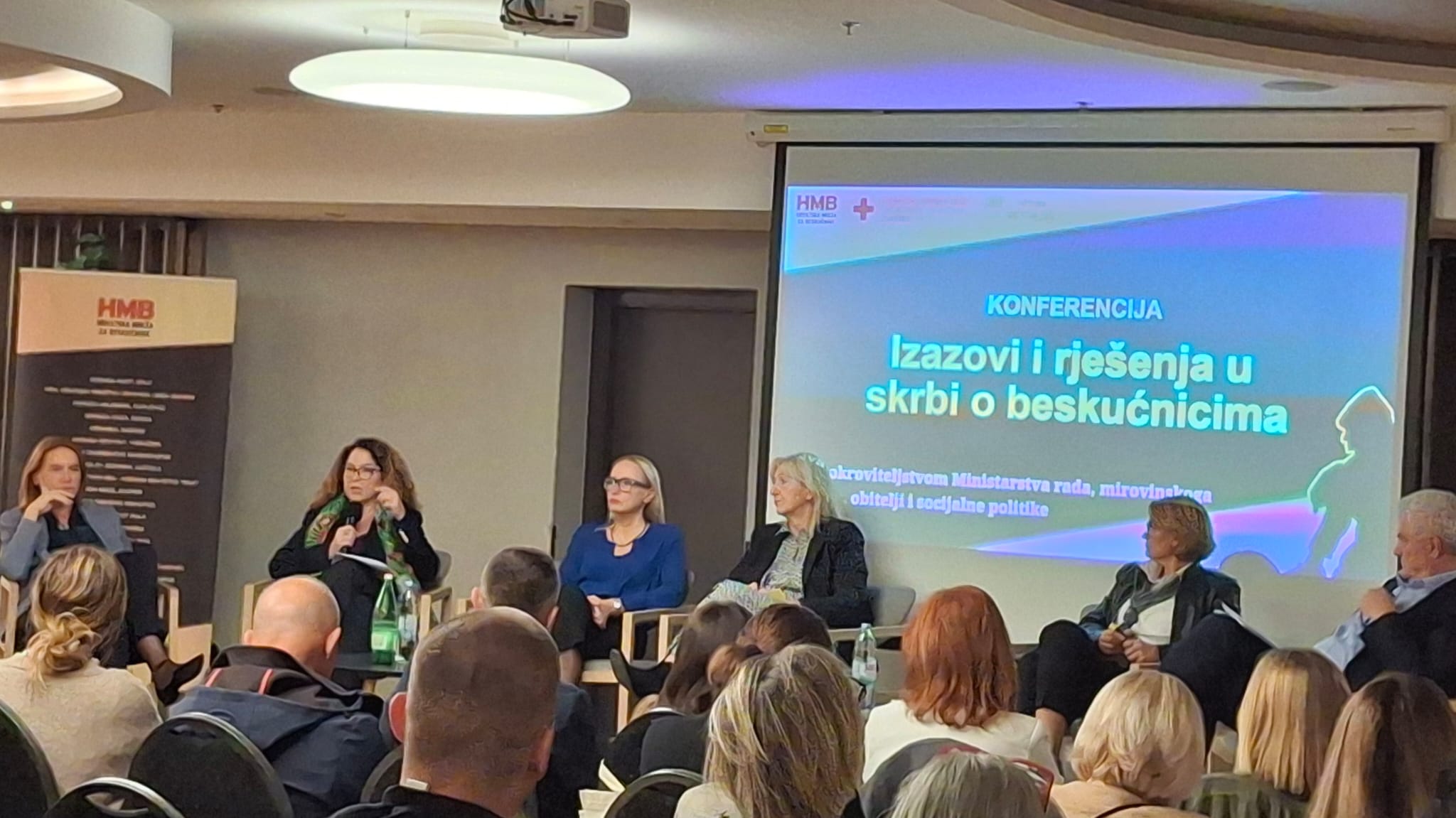
To mark World Homeless Day, the Croatian Homeless Network organised a conference entitled “Challenges and solutions in providing care for homeless people” on 9 October 2026. Ombudswoman Tena Šimonović Einwalter took part in a panel discussion held as part of the conference.
During the discussion, the Ombudswoman emphasised that homelessness is an important issue in the institution’s work and an increasingly significant and complex social problem. This is particularly evident in the context of increasingly unaffordable housing, sharp increases in the prices of basic foodstuffs and other living costs, as well as the growing effects of climate change and extreme weather, which increasingly endanger people without a permanent roof over their heads.
The Ombudswoman also highlighted the key problems affecting the rights and situation of homeless people, which she has been drawing attention to for many years. These include social stigma; the lack of a unified register establishing the actual number of homeless people, which would provide a basis for developing effective public policies to combat homelessness; difficulties in obtaining identity documents and exercising their rights; the chronic shortage of accommodation and appropriate care throughout Croatia, particularly for people in poor health; and the criminalisation of poverty through penalties for begging.
Reflecting on the current state of the system, the Ombudswoman warned of insufficient intersectoral cooperation, as well as insufficient cooperation between central government and local authorities. These shortcomings are particularly evident when coordinated action, cooperation and the timely exchange of information are required to provide appropriate care to a person in need, but are often lacking in practice.
The Ombudswoman therefore reiterated that she has long advocated the development of a protocol defining the responsibilities of all stakeholders in protecting the rights of homeless people. She also highlighted other recommendations addressed to the competent institutions, including the need to develop a National Strategy to Combat Homelessness, map homelessness, and ensure accommodation and appropriate care for homeless people with serious health conditions.
Alongside Ombudswoman Šimonović Einwalter, the panel included Lora Vidović from the City Office for Social Protection, Health, War Veterans and Persons with Disabilities, Deputy Ombudsperson for Persons with Disabilities Anica Ježić, Marija Penava Štimac from the Ministry of Labour, Pension System, Family and Social Policy, and Gojko Bežovan from the Centre for the Development of Non-Profit Organisations. The discussion was moderated by Olja Družić Ljubotina from the Faculty of Law, University of Zagreb.